Note: Be careful when updating records in a table! Notice the WHERE clause in the UPDATEstatement. The WHERE clause specifies which record (s) that should be updated. If you omit the WHERE clause, all records in the table will be updated!
The SQLUPDATEstatement is used to modify existing records in a table. It allows you to change one or more column values for specific rows using the WHERE clause.
In this SQL tutorial, I will show examples of UPDATEstatement syntax, demo a basic UPDATE of a single column for a single row, an UPDATE of a column for all rows, an UPDATE based on a join to a referencing table, and a multi-column UPDATE.
You can use the UPDATEstatement to update a FILESTREAM field to a null value, empty value, or a relatively small amount of inline data. However, a large amount of data is more efficiently streamed into a file by using Win32 interfaces.
To update the age of Alice to 23, you would run the following query: After running the query, the Students table will look like this: Here, the UPDATE statement modified the Age of Alice to 23 as specified in the SET clause. The WHERE clause is used to specify the record to be updated.
Learn how to modify existing data in SQL databases with UPDATEstatements, including advanced techniques and best practices. The UPDATEstatement modifies existing records in a table. Here's the basic syntax: SET column1 = value1, column2 = value2, ... Always use a WHERE clause unless you want to update ALL rows in the table!
Whether you want to change one row or multiple rows at once, the UPDATE statement provides a way to alter data in your database dynamically. In this guide, we will cover the syntax, step-by-step explanations, and a range of examples to help you understand how to use UPDATE statement effectively.
It allows you to change the values of one or more columns in one or more rows of a table based on specified conditions. The basic syntax for the UPDATE statement is as follows: SET column1 = value1, column2 = value2, ...
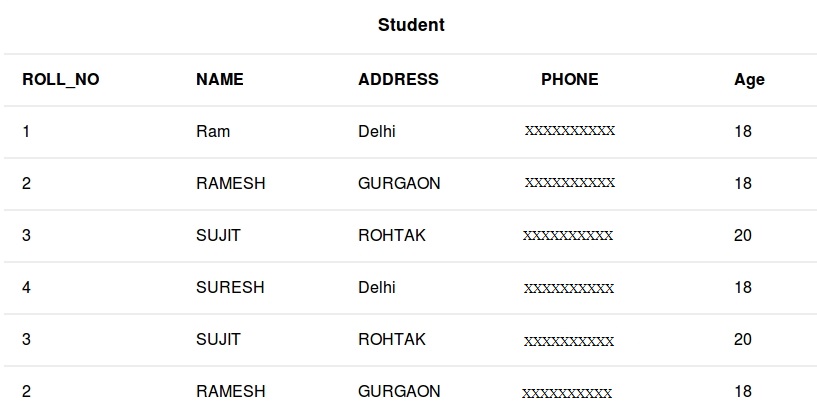 The SQL UPDATE statement is used to modify existing records in a table. It allows you to change one or more column values for specific rows using the WHERE clause.