Lesson 4 focuses on the use of velocity versus timegraphs to describe motion. As we will learn, the specific features of the motion of objects are demonstrated by the shape and the slope of the lines on a velocity vs. timegraph.
A velocity-timegraph shows changes in the velocity of a moving object over time. The slope of a velocity-timegraph represents acceleration of the moving object.
Velocity-timegraphs show how velocity changes over time, with the slope representing acceleration, and the area under the graph representing the distance travelled.
The Velocity Time Graph Calculator is an insightful tool designed to aid you in understanding velocity changes over time. It provides a graphical representation of an object’s motion, offering clarity on speed variations, acceleration, and overall motion dynamics. By plotting velocity on the y-axis and time on the x-axis, this calculator assists in visualizing how an object’s velocity ...
A velocity-timegraph shows how velocity changes over time. The sprinter’s velocity increases for the first 4 seconds of the race, it remains constant for the next 3 seconds, and it decreases during the last 3 seconds after she crosses the finish line.
Velocity-timegraphs are powerful tools for understanding motion. They reveal an object's displacement, acceleration, and speed changes over time. By analyzing the graph's area and slope, we can calculate crucial motion parameters and visualize complex movements.
When the velocity is constant, the velocity-timegraph, with Y-axis denoting velocity and the X-axis denoting time, will be like: As the graph shows, the velocity is constant (c) throughout the interval. No particles of matter how much the time changes, the velocity will be c at every instant.
What is a velocity-timegraph and what does it fundamentally represent? A velocity-timegraph is a powerful tool in physics that visually represents an object's motion. It plots the velocity of an object on the vertical (y-axis) against time on the horizontal (x-axis).
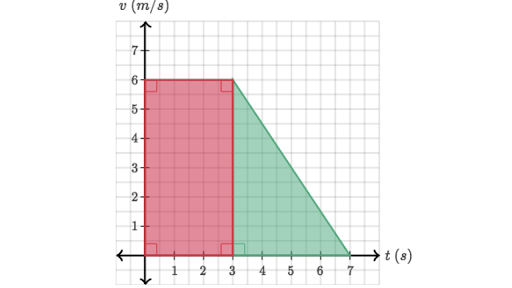 Learn how to interpret the motion of an object represented on a velocity vs. time graph.
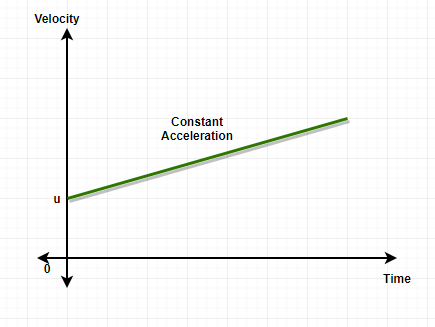 There can be several types of velocities an object in motion can have, and explaining the characteristic of velocity w.r.t time is easier graphically.