Describe the linear approximation to a function at a point. Write the linearization of a given function. Draw a graph that illustrates the use of differentials to approximate the change in a quantity. Calculate the relative error and percentage error in using a differential approximation.
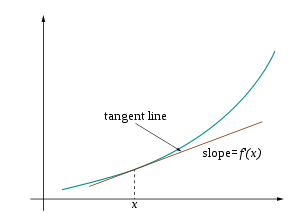
In mathematics, linearization (British English: linearisation) is finding the linear approximation to a function at a given point. The linear approximation of a function is the first order Taylor expansion around the point of interest.
Linearization in calculus is the process of approximating a function near a specific point using a tangent line. This method involves finding the linear approximation of a function, which is represented by the equation L (x) = f (a) + f' (a) (x - a).
Find linearizations and tangent line approximations with comprehensive calculus analysis. Free tool for differential calculus and function approximation.
In calculus and mathematical modeling, approximating complex functions near a given point is a vital tool. The LinearizationCalculator on our website provides a fast and intuitive way to compute the linear approximation of any differentiable function at a specific point.
Introduction to LinearizationLinearization is a fundamental concept in calculus that provides a simple yet powerful method for approximating complex functions near a given point.
Linearization supplies those fast numeric snapshots. By sliding a straight line along a smooth curve, the method turns a hard function into an easy one. Therefore, students on the AP® Calculus exam often meet questions that demand this skill.
Definition: Linearization is a method to approximate a function using its tangent line near a point. Formula: L (x) = f (a) + f' (a) (x - a) Key Applications: Accuracy Note: The approximation is most accurate when x is close to the center point a. Your rating helps improve LinearizationCalculator - Linear Approximation.
Using linearization to estimate changes in a value: fundamental to physics and engineering. In 1-dimension, we define a variable called d x that we think of as measuring small changes in the input variable, and d y = y − y 0 which measures small changes in the output.
 In mathematics, linearization (British English: linearisation) is finding the linear approximation to a function at a given point. The linear approximation of a function is the first order Taylor expansion around the point of interest.